
The BASIS Independent School philosophy with testing in early grades is preparation. The Comps, or comprehensive exams, prepare you for Advanced Placement testss, and the PreComps prepare you for the Comps. Both PreComps and Comps are cumulative exams, meaning they test knowledge gained throughout the entire year to date. This facet aligns with the BASIS Curriculum. PreComps are weighted 15% of trimester 3, and Comps are worth 25% of your final grade, just as much as any one trimester.
When it comes to the practical use of these exams, there is little to disagree with. The BASIS Independent Schools guarantee rigor and preparation. These tests, in their multitude and cumulative properties, certainly provide rigor. Specifically, they provide an accurate simulation of what taking the Comps will look like, as you have a chance to revise your methodology for Comps if the PreComps go poorly.
I can speak from personal experience, not having been able to even fall asleep the Monday before my first day of both the PreComps and Comps. Through these exams and preparation, I found myself to be better adapted and far more confident than a non-BASIS student in other exams. I was much more comfortable and could focus better. In theory, taking standardized tests early prepares students for high-stakes testing (e.g., SAT, ACT).
In execution, the exams are handled incredibly unrealistically. For example, when results are in, teachers do not alter their curriculum to review low-yield topics. Materials given to students, such as the study guides and test-taking strategies packet, both including study schedules for an entire month, subconsciously advertise that studying quantity is better than quality. Many students start studying a month or even two months before the exams. The weight of the PreComps is blown out of proportion by many teachers as well, seeing as how the exams are usually worth little more than any other quotidian assessment; therefore, we should not be evaluating teachers on this exam more than on any other. They simply provide a more thorough review of teachers’ performance, and give both students and teachers the chance to evolve and adapt for the future. With excessive pressure on teachers, the entire process puts pressure on teachers, who, in turn, put similar levels of pressure on students to perform well.
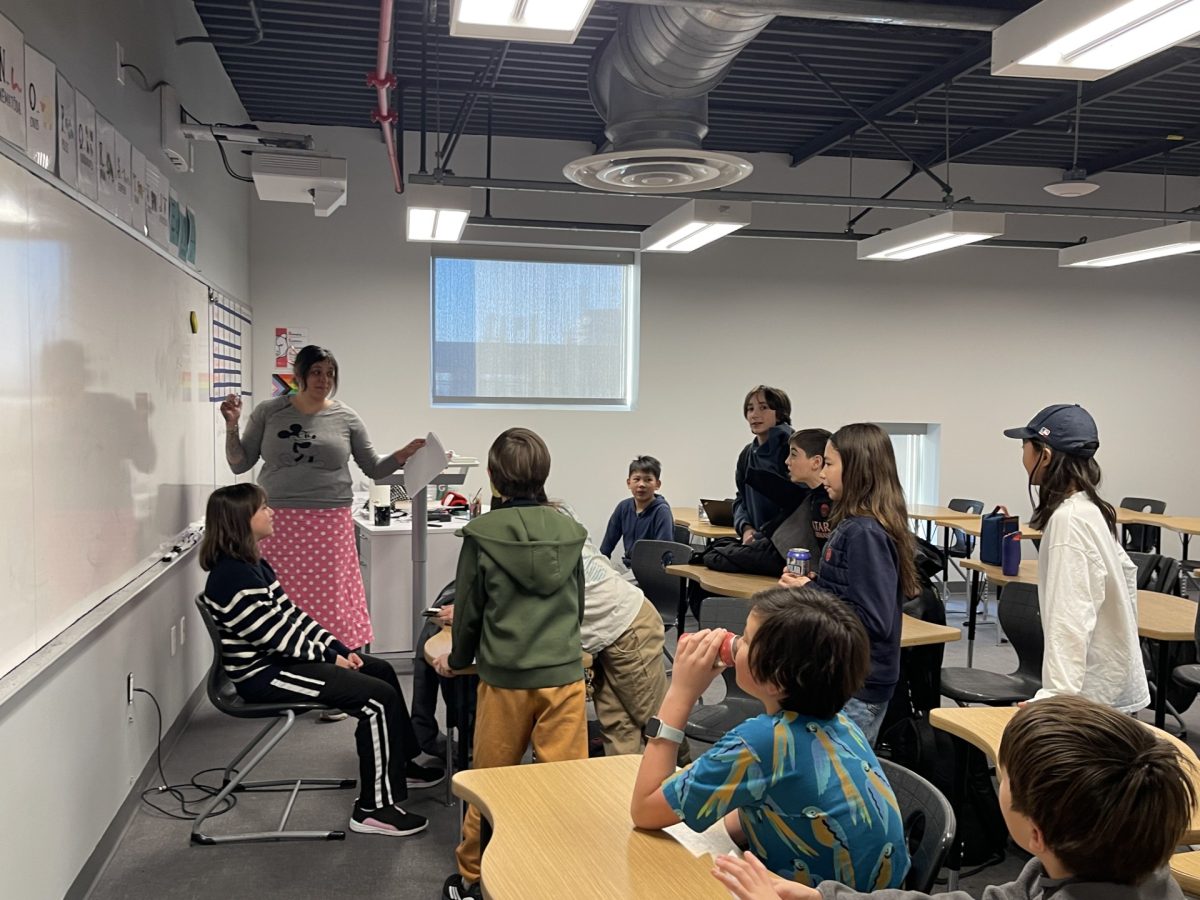
The PreComp Study Party is an entirely different problem from the preparation for the exams. It gives two hours for middle school students to come to teachers (except the elusive Ms. Thorne) to ask questions. It is not only ineffective for students but also makes teachers anxious: especially popular teachers face myriad students who can fit into their classroom, all running on pizza and adrenaline. The study party is unfortunately framed to be a major source of help for many, especially sixth graders, who are the most nervous. Many students do not receive the help they need, not at the fault of overwhelmed teachers but of the inherent system. Students either have too much confusion with one subject or too many teachers to question while their entire grade is struggling with the same concepts–and that’s the best case scenario with some teachers stretched across multiple grades. Instead, going to the weekly Student Hours offered by teachers would be more effective.
The primary goal and focus of the precomps should be for students who have never had to study to learn to.
As we watch how our school community interacts with the test, we must evolve the test to meet our needs. For one, teachers should not be evaluated based on the PreComps. This will lead to the exams being handled like any cumulative test. Teachers and administrators should instead support experimentation with different studying techniques by something as simple as distributing an information sheet about common study methods and tips, which is already done but not advantageous: “students should put their phones away while studying”; and “dedicating thirty minutes a day utilizing methods specific to their subject (i.e. drawing charts of processes for biology).” The study party could be stretched over two or three weeks of extra student hours. Teachers must also allot room in the year for more practice of topics that the exam showed did not stick, as that is the point of the cumulative test: to find gaps in retention. For students like me, having a strong support system and more opportunities to ask and be given help will prevent those sleepless nights before the testing week.
The PreComps do prepare students by introducing intense testing early, but students currently lack the support to find studying techniques leading up to the exams. Although it is imperfect, it has succeeded in part in preparing me to take the Comps and other forms of stressful testing. They also motivated me to find the study methods I use to this day. With just a few steps in the direction of aforementioned changes, the PreComp will become much more effective in helping students learn how to learn and be successful.